
Por Mariluz Florian
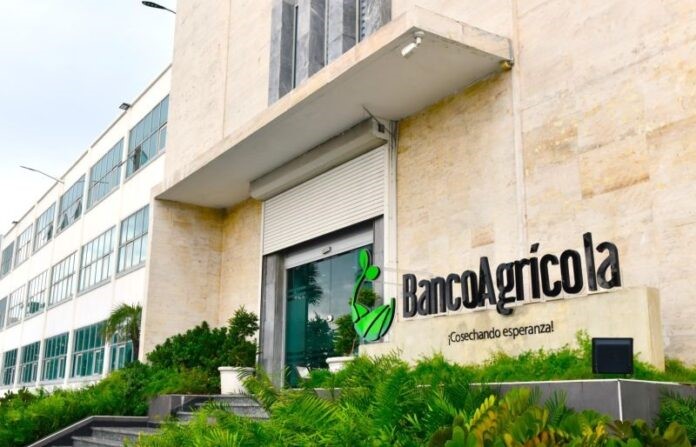
SANTO DOMINGO.- The Agricultural Bank of the Dominican Republic shows «serious signs of internal deterioration» despite the unlimited support it receives from the State, according to a news outlet that claims to have had access to an external audit of the institution.
The Panorama newspaper, published in this capital, highlights that this occurs despite the fact that Feller Rate, an international rating agency, awarded it the highest rating “AAA” in 2025, based on the unlimited guarantee of the Dominican State to its financial operations.
The publication highlights that an audit of its 2023 and 2024 financial statements assessed the bank’s true internal health and concluded by pointing out serious accounting and operational deficiencies.
DISBURSEMENTS ALMOST DOUBLED
Although it acknowledges that in recent years the bank has channeled record volumes of loans to producers across the country, Panorama says that data shows that annual disbursements nearly doubled between 2020 and 2024, going from approximately RD$359 billion in 2020 to RD$668 billion in 2024.
It highlights that at the close of 2024, it reported a total loan balance of RD$39,105 million, but a significant proportion of that amount is compromised by default or litigation.
“According to the audited financial statements, Banco Agrícola had accumulated RD$3.703 billion in loans overdue by more than 90 days (past-due portfolio), and loans in the judicial collection process totaled another RD$1.992 billion. In total, more than RD$5.6 billion were in a critical recovery situation, representing about 15% of the entire portfolio,” it states.
It states that although the bank was required to have RD$6.486 billion in provisions to cover the risk of its non-performing loans by December 31, 2024, the provision actually set aside by the bank was only RD$3.018 billion. “In other words, almost half of the credit risk (a shortfall of RD$3.467 billion) was uncovered on the books. The auditors emphasize that this figure represents the regulatory minimum; in practice, the gap could be larger due to the lack of portfolio cleanup, the high proportion of loans in legal collection, and the existence of items whose value could not be fully validated,” it adds.
MORE THAN 3 BILLION WITHOUT FINANCIAL BACKING
He says this accounting gap means that more than three billion pesos in potentially uncollectible loans have no financial backing whatsoever.
It adds that the institution has almost RD$17 billion in managed loans, placed under public programs, without audited prudential evaluation in the base statements and without associated provisions.
He argues that relatively small provinces, such as Monte Plata or San José de Ocoa, appear among the largest recipients of loans, even surpassing traditional agricultural centers.
A CURBID AND INefficient Operational Structure
He adds that another critical aspect of the Agricultural Bank’s situation is that its operation costs the country a considerable sum each year, and a large part of that cost goes toward maintaining a large payroll. “In 2024, the bank’s total operating expenses amounted to RD$2.917 billion, of which 67.5% – equivalent to RD$1.970 billion – were allocated exclusively to the payment of salaries and compensation for personnel,” he adds.
OUTDATED TECHNOLOGY AND WEAK CONTROLS
Fernando Durán, Director (General Manager) of the Agricultural Bank of the Dominican Republic. Illustration: (Ramón Sandoval).
Panorama reports that in the 21st century, Banco Agrícola operates with an outdated technological platform that doesn’t even allow it to generate basic financial reports required by the regulator. BDO auditors indicate that as of the end of 2024, the bank was still unable to produce key institutional reports requested by the Superintendency of Banks, such as consolidated cash flow statements, complete information on related parties, or the calculation of technical credit limits.
“The practical consequences of this omission are profound. Lacking modern systems, the bank hinders both internal and external oversight. Auditors indicate that this limitation prevented them from validating essential balance sheet items,” he says.
OTHER ACCOUNTS NOT UPDATED
He adds that the control problems go beyond technology, as the 2024 audit found unreconciled and out-of-date accounting items, which is a sign of administrative disarray.
In addition to the above, the bank did not revalue its properties within the two-year period required by current regulations, which means that the land or buildings it owns (for example, its offices, or perhaps part of those awarded assets mentioned) may be recorded in the accounts at values far removed from market reality.
The auditors also noted a lack of confirmation of balances with several key institutions such as the Ministry of Finance, the Dominican Agrarian Institute (IAD), the Ministry of Agriculture, and the Reserve Bank.
AT A CROSSROADS
The newspaper concludes: “The audit findings have uncovered alarm bells that cannot be ignored. The Agricultural Bank, a theoretical jewel of Dominican public banking, is at a crossroads. Either decisive measures are taken to strengthen its governance, portfolio cleanup, internal controls, and technology, or it risks becoming a costly shell that serves more as a bureaucratic apparatus than as an engine of development.”